Top humanities graduate finds her passion, community at USask
Emily Zbaraschuk’s academic achievements recognized with multiple convocation awards
By Kristen McEwen
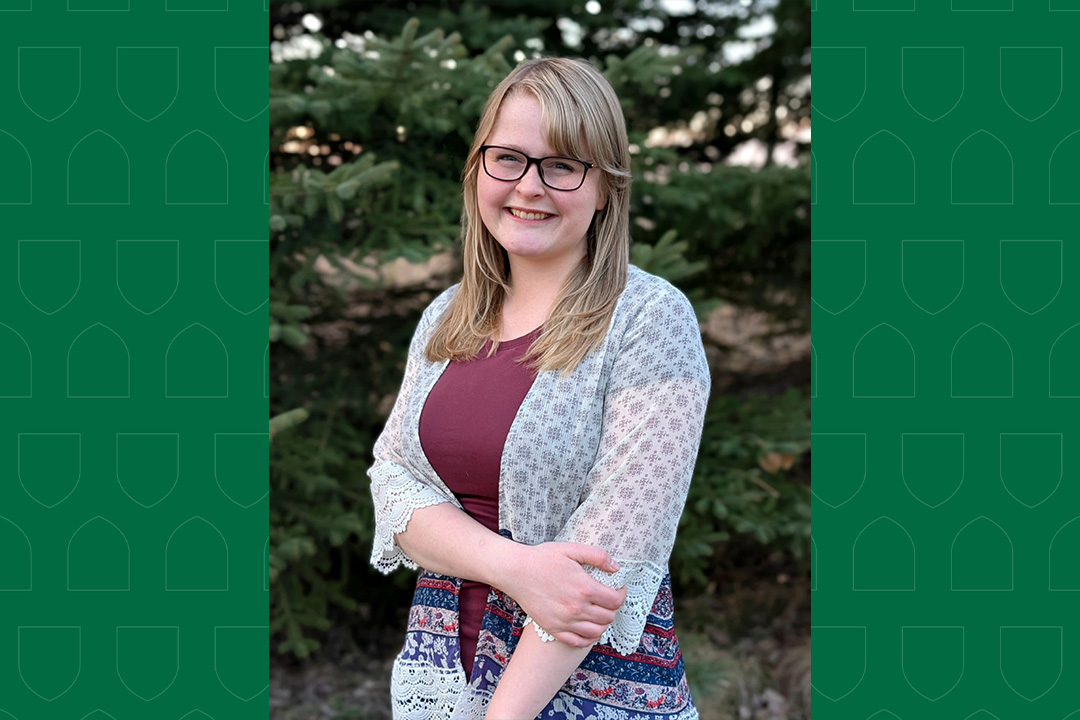
The path Emily Zbaraschuk chose at the University of Saskatchewan (USask) led her to have a better understanding of literature, history and herself.
“Humanities are so, so important for understanding our place in the world, regardless of whether we’re studying literature from yesterday, or 1,000 years ago,” she said.
Zbaraschuk is graduating at this year’s USask Spring Convocation with two Bachelor of Arts (Honours) degrees: one in English and the other in Classical, Medieval and Renaissance Studies (CMRS). She has also earned a Certificate in Creative Writing.
“I always have loved reading stories and books,” Zbaraschuk said. “English was kind of a no-brainer on that one because it’s basically an excuse to read a lot of great literature and talk with people who have also read the same things. It’s a massive book club, and a lot of fun.”
She is also receiving the Copland Prize in Humanities, which recognizes the most distinguished graduate in the humanities in the College of Arts and Science; Most Outstanding Graduate in Classical, Medieval and Renaissance Studies; Award for Excellence in English Studies; and the Thomas Deis ‘38 WWII Memorial Prize from St. Thomas More College.
Zbaraschuk grew up on a grain farm about 30 minutes northeast of Prince Albert, Sask.—near Meath Park.
Like many students from Saskatchewan, the closeness of campus to home appealed to her. She also received an entrance scholarship to attend USask.
“It definitely made the choice for me, in a certain sense,” Zbaraschuk said. “I’m actually quite glad that I ended up here, because of the quality of classes and everything that I’ve managed to experience, through the opportunities that the University of Saskatchewan has offered.”
She received several scholarships over the years at USask, including: the Reginald J.G. Bateman Memorial Scholarship in English, the R.A. Wilson Memorial Scholarship, a Hannon Scholarship, and a Hannon Travel Scholarship.
Zbaraschuk started at USask in the Fall Term 2021. Still recovering from the pandemic, USask had planned for in-person classes but needed to quickly pivot to online learning when COVID-19 cases spiked once more.
“In some ways, it was a little bit of a blessing because I got used to living on my own, by myself, without having to navigate buses and finding classes. It was like, ‘OK, I’m living in a new place, I’ve got this.'”
She found herself feeling lonely during her first year.
“There’s this sort of narrative that gets produced by movies and adults around you—and some of it’s true—that university’s going to be this time where you flourish and you’re going to find so many people who are like you,” Zbaraschuk said.
“Figuring out who you are in a totally new environment is definitely something that was a challenge I faced at university,” she said. “I know others face it as well.”
By her second year of classes, she found her community by meeting students taking similar courses.
Zbaraschuk knew she wanted to major in English to eventually become a novelist.
“Along the way, I realized that I’m actually really, really interested in medieval and Renaissance literature,” she said.
A study abroad course in Herefordshire, England, helped Zbaraschuk solidify her choice in pursuing a second degree in CMRS. During the trip, she had the opportunity to visit various communities and small towns in Wales as well as England.
History professors Drs. Sharon Wright (PhD) and Frank Klaassen (PhD) helped Zbaraschuk become aware of opportunities for hands-on experience, including digging through archives from 600 to 800 years in the past.
She was also a volunteer on the editorial board of the in medias res, the liberal arts journal based in St. Thomas More College. She was the layout and design editor for two years prior to becoming editor-in-chief. She volunteers with Access and Equity Services for notetaking services, and at her local church, playing piano and leading services.
Zbaraschuk recommended that students take their time when navigating their degree. She completed her degrees in five years.
“This is one of the few times when you are given that opportunity (to dig into subjects),” she said. “Follow your passions. If it needs to take extra time to make your degree happen, that’s totally OK.”
“I know lots of people decided to take five or six years to finish their English, history degree, and they always say that it gives them just enough time to fully engage with the material.”
As Zbaraschuk plans to take a year off from university after Spring Convocation, she intends on applying to graduate school to pursue a master's degree, and eventually a PhD in medieval studies, with a focus on Middle English literature.
“I’m really grateful for all the people who have supported me over the last several years—friends, family, church community, professors, all of these different people have made it possible for me not only to finish my degree, but also to excel in my studies,” she said.
“I’m grateful for the opportunity USask has given me.”
Related Articles
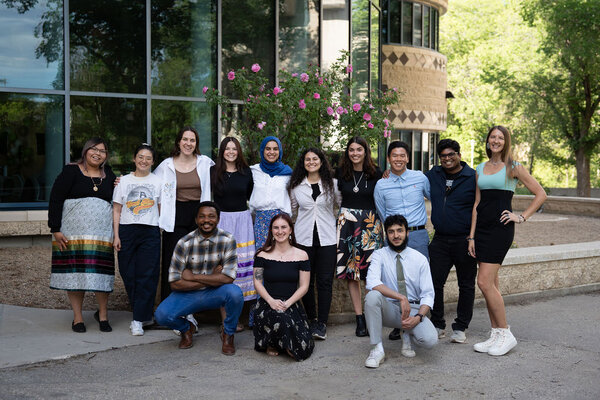
USask receives NSERC award for Science Ambassador Program
Zoe Slusar wants to inspire young people about the possibilities of science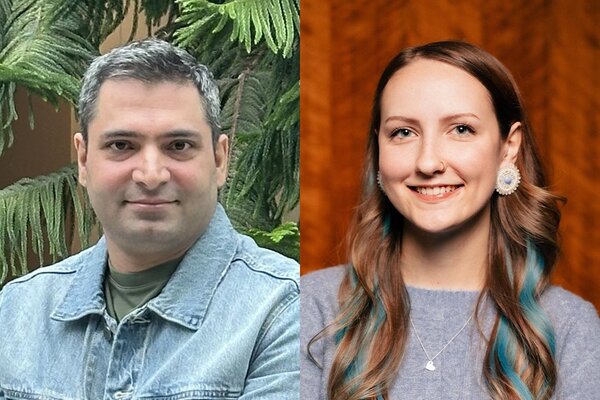
USask students receive Lieutenant Governor Scholarship awards
Mehdi Khalaj, a PhD student in Computer Science (Quantum Bioinformatics), is a recipient of a 2026-27 Saskatchewan Lieutenant Governor Scholarship